How to Clean Makeup Brushes Without Wrecking Them
Written and reviewed by the Soielle team. Last updated August 2026.
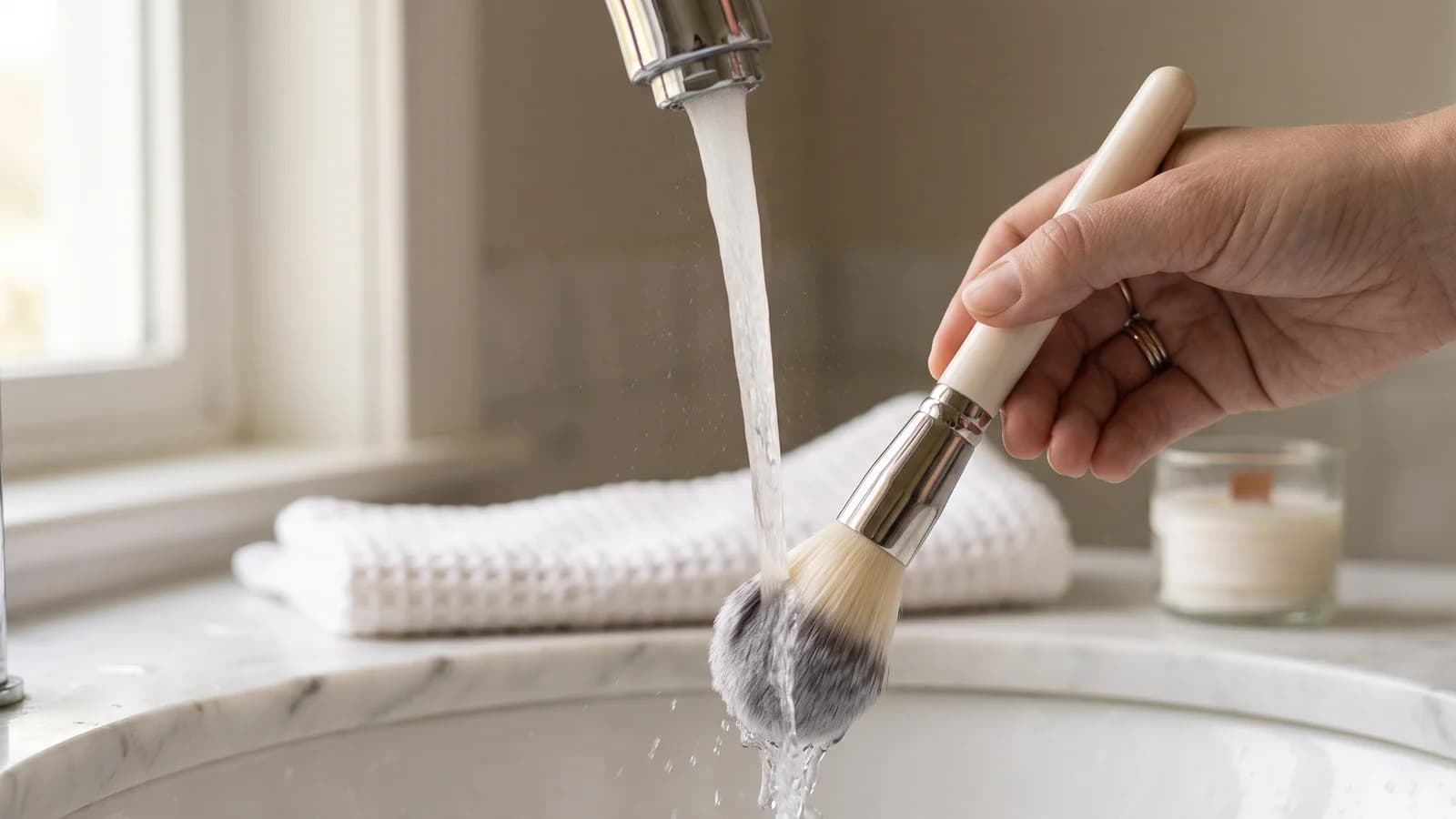
The short version: hold the brush bristles-down, wet the head, and swirl it in a little gentle shampoo against your palm or a textured mat until the water runs clear. Squeeze it dry with a towel, reshape the head, and leave it flat with the bristles overhanging a counter edge. Keep water out of the metal collar and keep the brush away from heat, and that is most of the job.
Almost nobody needs telling that their makeup brushes are overdue. The reason they sit dirty is not ignorance, it is that washing them writes off the brushes until tomorrow, and by tomorrow the impulse has gone. So the useful version of this guide is not a lecture about bacteria. It is the method, the two mistakes that actually destroy brushes, and an honest answer on how long they take to dry.
There is also a set of questions the British search results keep asking that the big beauty guides skip entirely: whether Fairy liquid is allowed, what to do about hard water, and why half the people searching this end up reading about white spirit. Those get answered properly below.
A clean brush lays product down more evenly and stops you dragging last week's foundation through today's. That is reason enough on its own. We are not going to make claims about what dirty brushes do to your skin, because that is a question for a dermatologist rather than a shop.
What you need
Nothing on this list is specialist, and most of it is already in your bathroom.
- A gentle cleanser: a dedicated brush shampoo, baby shampoo, or your own facial cleanser well diluted. The American Academy of Dermatology suggests lukewarm water with a gentle shampoo, which is about as uncontroversial as this gets.
- Lukewarm running water. Not hot, which softens the glue inside the brush, and not cold, which leaves grease sitting in the bristles.
- A textured surface to swirl against. A silicone cleaning mat if you own one, the palm of your hand if you do not. Both work.
- A clean towel, and a counter edge to dry over.
How to clean makeup brushes, step by step
This is the best way to clean makeup brushes if yours are synthetic, which is most of what is sold now. Natural hair brushes get their own treatment further down.
- Wet the bristles only, holding the brush so the head points down and the water runs away from the handle. Never hold a brush bristles-up under a tap.
- Work a little cleanser through the head, swirling against your palm or a textured mat. Let the bristles move against each other. That, rather than any scrubbing, is what lifts the product out.
- Rinse, still pointing down, until the water runs clear. Foundation and concealer brushes usually need a second pass. Powder and shadow brushes rarely do.
- Squeeze the water out gently with a towel, pressing rather than pulling. Pulling loosens bristles at the base.
- Reshape the head with your fingers while it is wet. A brush dries into whatever shape you leave it in, which is why splayed brushes stay splayed.
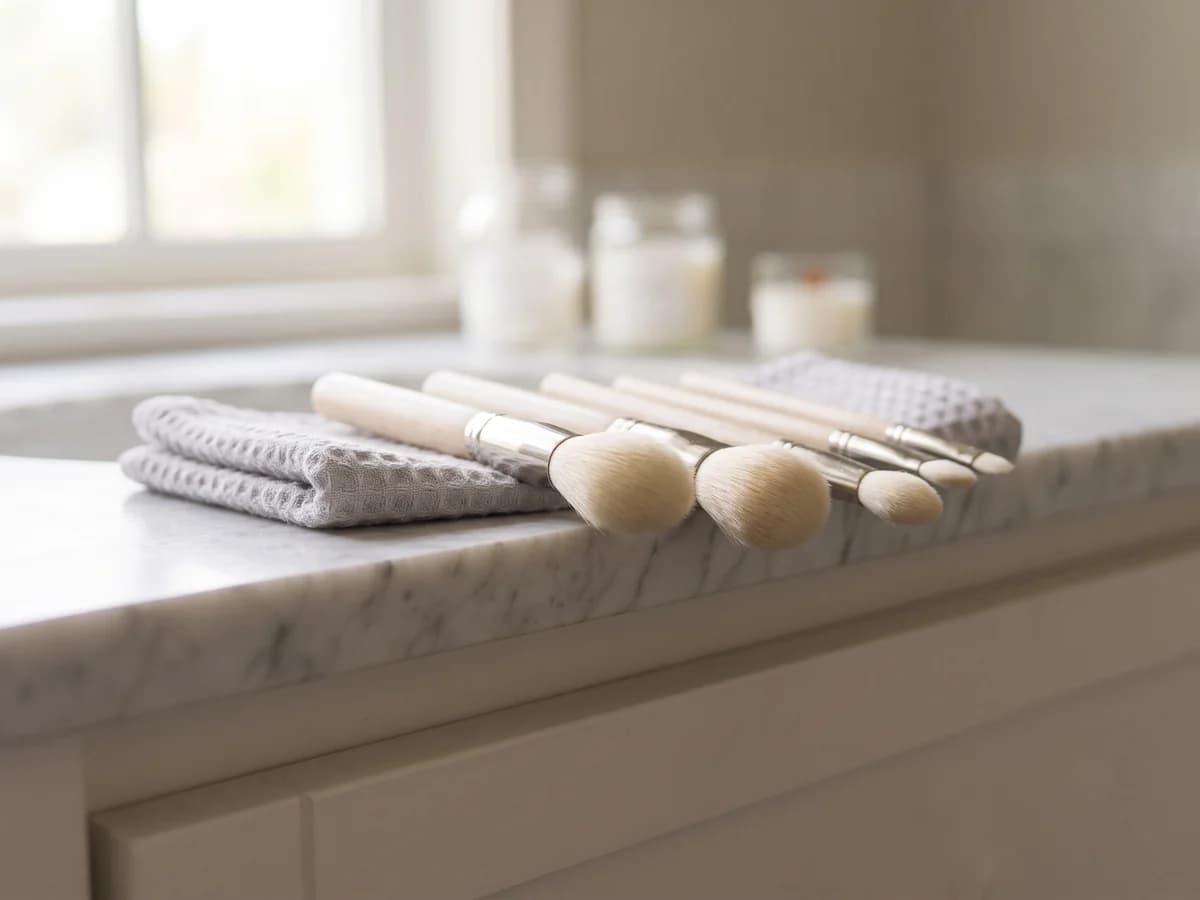
- Dry flat, with the head hanging slightly over the edge of a counter so air reaches it from underneath. Never stand a wet brush upright in a pot.
The ferrule is the whole game
The ferrule is the metal collar between the handle and the bristles, and it is where brushes go to die. The bristles are glued into it. Water that wicks up past the bristles sits in that join, softens the adhesive, and a few washes later the brush starts shedding into your foundation. Once that begins it does not stop.
Every rule that sounds fussy traces back to this one part. Bristles down under the tap, because water runs away from the ferrule instead of into it. No soaking, because a brush left standing in a bowl draws water straight up. Dry flat and overhanging, because a brush drying upright drains the last of the water back down into the join. Get the ferrule right and cheap brushes last years. Get it wrong and expensive ones do not survive the summer.
What to wash them with, and the Fairy liquid question
Yes, washing-up liquid will clean a makeup brush. No, it is not a good habit. Fairy and everything like it is built to strip cooked-on fat off crockery, and used neat on bristles it does the same job on the finish. Synthetic fibres come out squeaky and stiff, and they are prone to splaying. Heavily diluted, as an occasional rescue for a brush caked in cream product, it is fine. As your weekly routine it will visibly shorten the life of the set.
Baby shampoo is the cheap standby and genuinely works. A dedicated brush shampoo works slightly better on cream and liquid formulas and costs a few pounds. Solid brush soaps last a long time and suit anyone washing a full kit at once. What to avoid, beyond neat detergent, is anything alcohol-heavy: it dries synthetic fibres brittle and strips natural hair of the oils that keep it soft.
Natural hair brushes, the goat and squirrel ones, want the gentlest option you have and the shortest possible contact with water. Wash them by hand in tepid water, never soak them, and let them dry flat. If a brush was expensive and is made of animal hair, this is the one category where being precious about it is correct.
Hard water, and why your brushes still feel stiff
Much of the south and east of England sits in a hard water area, and hard water reacts with soap to leave a fine residue behind. If your brushes come out clean but feel faintly crunchy or look chalky once dry, that is usually limescale and soap film rather than leftover makeup. Most guides skip this entirely, which is fair enough if you are writing for everybody, less useful if you live in Kent.
Use less cleanser than feels right, because the more soap goes in, the more residue comes out. Rinse for longer than you think you need to, until the bristles feel slippery rather than squeaky. Squeaky is not clean, it is stripped. If it keeps happening, a final rinse in cooled boiled or filtered water on your best brushes deals with it.
Drying: the step that decides whether you bother
A dense foundation or powder brush takes several hours to dry through, and a thick kabuki left in a cool room can still be damp the next morning. Fine eye brushes are quicker, often ready in an hour or two. Most tutorials leave that number out, which is a shame, because the gap between washing and usable is why brushes go unwashed. No amount of knowing you should has ever closed it.
You can shorten it a little. Squeeze more water out than feels polite, using the towel to press the head from base to tip. Dry flat with the head overhanging an edge so air gets underneath rather than trapping damp against a towel. A room with moving air beats a closed bathroom. What you should not do is put a brush near a radiator or on a hot windowsill: heat is what softens the glue in the ferrule, which brings you back to the same failure.
If the wait is the thing that stops you doing it, that is a real problem worth spending on rather than a discipline failure. A spinner grips the handle, turns the brush in the water, then lifts clear and spins the water back out, so a brush washed after dinner is usable the same evening rather than tomorrow. It is not better at washing than your hands are. It is better at drying, and drying is the part that was stopping you.
How often, realistically
Weekly for base brushes, fortnightly for eye and powder, and after nearly every use for sponges, because damp foam is a different proposition to dry bristles. Our brush cleaner page goes through the frequency product by product if you want the longer version.
Weekly does not always happen. When it does not, scale the ambition down to something that survives contact with a real week rather than up. Wash the two brushes you use every day and leave the rest. A clean foundation brush and a clean concealer brush do more for how your makeup sits than a spotless set of twelve you washed once in March.
Deep cleaning, and when a brush is finished
A deep clean is the same method with more patience, not a different chemistry set. Work the cleanser in twice, give the head a gentle massage between the fingers to break up product that has compacted at the base, and rinse until the water runs properly clear rather than merely paler. Brushes that have gone a long time without washing often need three passes, and the third one is where the water finally stops running beige.
Some brushes are past it, and it is worth recognising rather than persisting. A brush that sheds bristles every time you use it has a failed ferrule and cannot be repaired. One whose head has splayed permanently and no longer comes back to a point after reshaping will not lay product down evenly again. Stiffness that survives a careful rinse in soft water usually means the fibres themselves are damaged, generally by heat or neat detergent. Replace those. Washing them harder only finishes the job faster.
Common questions
Can I use Fairy liquid to wash my makeup brushes?
It will clean them, but it is not a good weekly habit. Washing-up liquid is formulated to strip fat off crockery, and used neat it strips the finish off synthetic bristles too, leaving them stiff and prone to splaying. Well diluted, as an occasional rescue for a brush caked in cream product, it does no real harm. For routine washing, baby shampoo or a dedicated brush shampoo is gentler and costs about the same.
How do you deep clean makeup brushes?
Same method, more passes. Work the cleanser through twice, massaging the base of the head gently between your fingers to break up product that has compacted where the bristles meet the ferrule, then rinse until the water runs genuinely clear rather than just lighter. A badly neglected foundation brush often needs three rounds. What a deep clean does not mean is soaking, stronger detergent or hotter water, all of which attack the glue in the ferrule.
What can I use instead of white spirit to clean brushes?
If you are cleaning makeup brushes, you do not want white spirit at all. It is a solvent for paint brushes, and the two questions get tangled together in search results constantly. Makeup comes off with lukewarm water and a gentle shampoo. The only solvent-style products used on makeup brushes are the fast-drying spot cleaners working artists spray between clients, and those are made for cosmetics rather than paint.
How long do makeup brushes take to dry?
Longer than most guides admit. Fine eye brushes are often usable in one to two hours. Dense foundation, powder and kabuki brushes routinely take most of a day, and a thick one in a cool room can still be damp the following morning. Drying flat with the head overhanging a counter edge, in a room with moving air, is the fastest safe method. Keep them away from radiators, because heat softens the glue holding the bristles in.
How does Mrs Hinch clean her makeup brushes?
The method that circulates under her name is the standard one: a gentle soap or shampoo, lukewarm water, swirling the bristles against a palm or a textured mat, then drying flat. There is no secret product involved. It is worth being sceptical of any brush-cleaning hack built around a strong household cleaner, however popular it is, because the ingredients that make those effective on kitchen surfaces are the same ones that strip bristles and soften ferrule glue.