Serums feel like they work harder
Use it once a week on clean skin, gentle pressure. Skin looks fresher the next morning. Follow the cleaning instructions religiously.
Beauty Tech
Written and reviewed by the Soielle team. We research the sleep-beauty essentials and devices we sell and keep every product detail factual and current. Last updated August 2026.
4.0 · 1 reviews£11.99
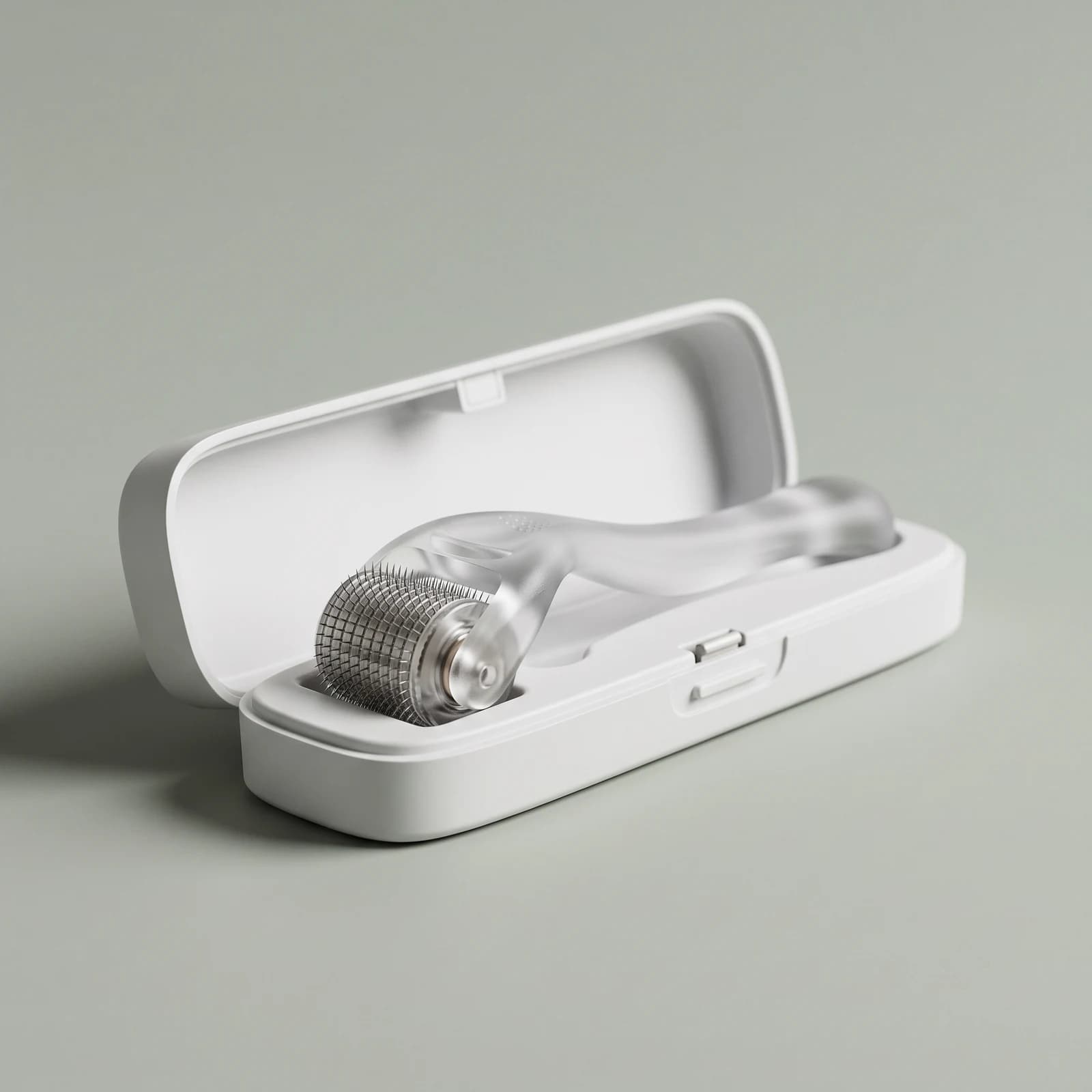
A 0.5mm derma roller for the slow end of an evening routine. Rolled gently over clean, dry skin, it opens temporary micro-channels so the serum you already own settles in rather than sitting on top.
The head is a sealed unit of fine needles in a staggered array and it arrives with a storage case. At 0.5mm it sits at the assertive end of what gets sold for home use, which is worth knowing going in.
Guidance on how long a home needle should be is not settled, which most product pages decline to mention. Medical News Today puts home-care rollers at under 0.15mm. NBC Select asked two board-certified dermatologists and reported that at-home devices are usually around 0.25mm, with in-office needles starting at 0.5mm and running to 2.5mm. Retailers selling this length in the UK describe 0.5mm as the ceiling for home use rather than a mid-point. So 0.5mm is not a mid-point. On the most generous reading it is the outer edge of home use, and on the strictest it is where professional work begins. We stock it because plenty of people run this length carefully and are happy with it, and because the alternative is pretending the disagreement is not there.
Start at the cautious end of every dial, then. One session a week before you think about two. Light pressure, never the eye area, and the alcohol soak before and after every single time. If your skin is reactive, or you have eczema or psoriasis that flares, this is a conversation for a professional rather than a purchase: the dermatologists NBC Select spoke to were clear that active flare-ups and at-home needling do not mix.
Bought as a derma roller for face use, most people then find themselves running it along the jaw and beard line as well. Derma roller beard use is common enough to be worth a note: the rules do not change with the body part, and the hygiene matters as much along a jaw as it does on a cheek. The scalp is the third use case and the one with the loudest marketing attached, so we will say plainly that this is a cosmetic tool rather than a hair-loss treatment, and that anyone shopping for the latter is better served by a GP than by a product page.
£11.99 sits between two shelves. Below it, a marketplace tier at £3 to £9 where the roller is close to disposable and the needle spec is anybody's guess. Above it, UK skin specialists ask £15 to £29 for the same 0.5mm length. Rollers are consumables wherever you buy them, so the price that counts is the repeat one. UK delivery is free, and you get a month to send it back.
Compare it to a clinic rather than to another roller. A practitioner runs the same principle deeper, with a powered device and proper aftercare, for a larger change at a larger price and with real downtime attached. This is the small, unglamorous version you can do on a Tuesday evening without booking anything.
This is not a nightly step and it does not reward being treated like one. A few minutes, once or twice a week, and it sits in its case the rest of the time. The gap between sessions is doing as much work as the sessions.
Longer needles get sold as the stronger version of the same idea. They are not. They belong to someone with training and a sterile room rather than a bathroom shelf, so we stock one length instead of a ladder of them.
The channels close on their own, and while they are open a product you already own gets further in than it would on unbroken skin. It gets more out of the bottle on your shelf instead of asking you to buy another one.
Needles blunt and rollers get replaced: that is the category, not a defect. At £11.99 against the £15 to £29 the UK skin specialists ask, swapping it on schedule stops being a decision you put off. Free UK delivery, and a month to return it.
After cleansing, before serum, on properly dry skin, and at night rather than in the morning. That is the whole placement, and getting it right matters more than any other detail you will read about derma rollers. Rolling over makeup, over residue or over damp skin is where most of the trouble starts.
So the order runs: cleanse, dry, sanitise the roller, roll one small section at a time, then a plain hydrating serum and nothing else. Leave the actives for a different night. Exfoliating acids, retinoids and strong vitamin C all sting more on freshly rolled skin, and the permeability that makes a hydrating serum worth applying is exactly what makes those a bad idea. The next morning: sunscreen, and no exfoliating.
Evening is partly practical and partly vanity. Skin often looks faintly flushed for an hour or two afterwards, which is easier to ignore at ten at night than at eight in the morning, and specialist retailers make the same point about keeping freshly rolled skin away from daylight. The cadence matters more than the timing though. Rolling more often does not compound the effect, it just keeps skin permanently slightly irritated, and irritated skin reads as worse, not smoother.
Drop the head into 70% isopropyl alcohol and leave it there while you cleanse. A good five minutes. It needs to be clean going in, not only coming out.
Cleanse, then dry the skin properly. Damp skin drags, and product residue gets pushed into the channels you are opening.
Work one small section at a time. Roll up and down four or five times, then side to side, then diagonally, lifting the roller off the skin at the end of each pass instead of dragging it round a corner.
Light pressure throughout. The needles do the work at this length, and pressing harder does not make it deeper, it makes it hurt.
Follow with a plain hydrating serum. Leave acids, retinoids and vitamin C for a different night.
Sanitise again, let it air dry fully, and put it back in the case rather than in a damp bathroom drawer.
Derma Roller 0.5mm
£11.99
Use it once a week on clean skin, gentle pressure. Skin looks fresher the next morning. Follow the cleaning instructions religiously.