Sunday reset
Steam, cleanse, mask. My skin drinks everything in afterwards. Mist is fine and even, not spitty like the cheap one I had before.
Beauty Tech
Written and reviewed by the Soielle team. We research the sleep-beauty essentials and devices we sell and keep every product detail factual and current. Last updated August 2026.
4.5 · 2 reviews£27.99
£34.99
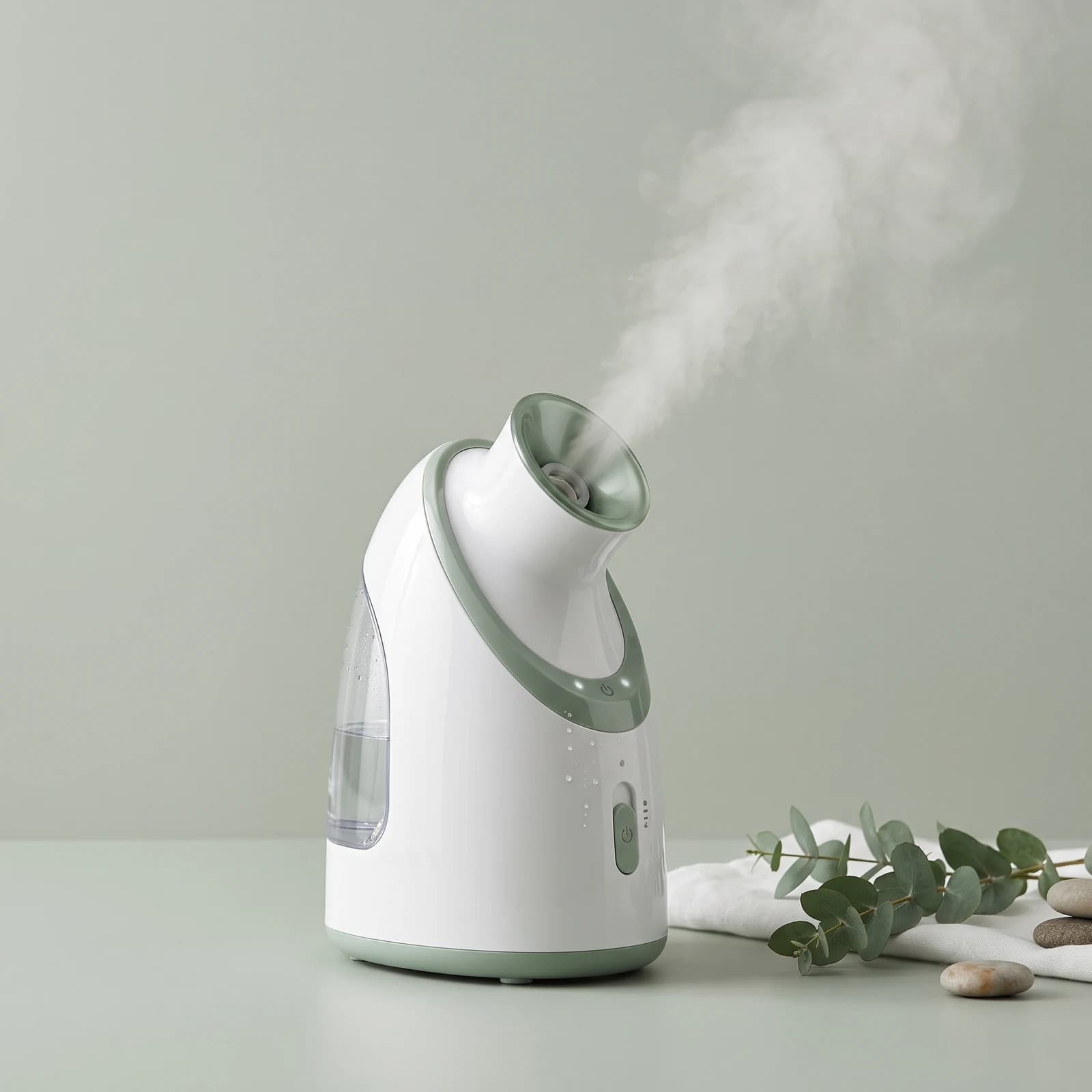
Save 20%Spa steam at home. The nano-ionic mist warms and softens skin in minutes, loosening the surface so cleansing and masking work better. It is the step facialists start with, in a compact device that lives on your shelf.
Fill the tank with water, press one button, and a fine, even mist is ready in under a minute. Most people steam for five to ten minutes before a cleanse or mask, once or twice a week.
fill the removable tank, press one button, and the nano-ionic mist is running before you have finished tying your hair back. It shuts itself off when the tank runs dry, which is the failure mode every cheap steamer has and the reason most of them end up unplugged in a cupboard.
this is not a daily step and treating it as one is the most common mistake in the category. Steaming too often is what causes the dryness and redness people blame the device for. Twice a week is plenty, and once is fine.
warm mist softens what is sitting on the surface so the cleanse or mask that follows has less to fight. That is the whole job. Anything that promises the steam itself will clear your skin is selling you the second step's work as the first step's result.
the UK market splits four ways (live prices, 2026-08-01): marketplace units at £17 to £23, the mid tier at £25 to £30 where this sits, consumer premium at £34 to £48, and salon and professional stands from £61 to £147. One high-street brand asks £80 for a nano steamer of this size. Free UK delivery, 30 days to change your mind.
Yes, for the thing they actually do, which is not the thing most of this category sells. Warm mist raises the moisture and temperature at the skin surface for a few minutes. That softens the mix of oil and dead skin sitting in and around the follicle, and it makes the skin more pliable. So the cleanse, the mask or the exfoliant you use next meets a softer surface and works with less scrubbing. That is a real, useful, unglamorous effect and it is worth ten minutes of your week.
What it does not do is open your pores. Pores are openings, not valves: there is no muscle around them to open or close, and nothing you put on your face changes their size. When a page tells you steam opens pores and then closes them with cold water, it is describing something that does not happen. We would rather say so than repeat it, even though repeating it is clearly what ranks.
The blackhead question deserves the same treatment. The NHS is blunt about what a blackhead is: they "are not filled with dirt, but are black because the inner lining of the hair follicle produces colour". So steam is not washing dirt out, because there is no dirt in there. What it does is soften the plug, which is genuinely why facialists steam before extractions. The NHS is equally blunt about the next step: do not try to clean out blackheads or squeeze spots. If softening is as far as you take it, steam is a sensible part of a routine. If steaming is your run-up to squeezing, the steamer is not the problem.
And there are real downsides, which almost nobody selling one will tell you. WebMD puts it plainly: too much water and steam can strip your skin of its natural oils, contributing to dryness and irritation, and because facial steaming dilates your blood vessels it can cause excessive redness, particularly for people with sensitive skin. That is the honest case against overusing this, and it is why our guidance is twice a week rather than nightly. If you have rosacea, eczema, active or severe acne, or skin that flushes easily, ask a GP or a dermatologist before you steam at all.
Fill the tank with distilled water, or with water you have boiled and let cool. UK tap water is hard in most of the country and limescale is what kills these devices.
Sit the steamer on a flat, stable surface at about chest height, with the nozzle angled up towards where your face will be. A kitchen worktop works better than a bathroom shelf.
Cleanse first, and tie your hair back. Steaming over the day's makeup and SPF just softens that instead of your skin.
Press the button and give it under a minute to produce a steady mist, then sit about 20 to 30cm back. Check your manual for the distance it specifies. If it feels hot rather than warm, you are too close: move back, do not tough it out.
Stay in the mist for five to ten minutes, eyes closed, breathing normally. Come out if your skin starts to feel tight or looks flushed rather than pink.
Pat your face dry, then go straight into the next step while skin is still soft: a mask, a gentle exfoliant, or your serum and moisturiser. Do not leave damp skin to air dry, and do not follow steam with a strong acid or a retinoid on the same night.
Nano Facial Steamer
£27.99
Steam, cleanse, mask. My skin drinks everything in afterwards. Mist is fine and even, not spitty like the cheap one I had before.
Heats up fast and the tank does a full session. Use boiled-then-cooled water like the manual says and there's no residue.