Rest & Recovery
Lavender Wheat Eye Pillow
Written and reviewed by the Soielle team. We research the sleep-beauty essentials and devices we sell and keep every product detail factual and current. Last updated August 2026.
£15.99
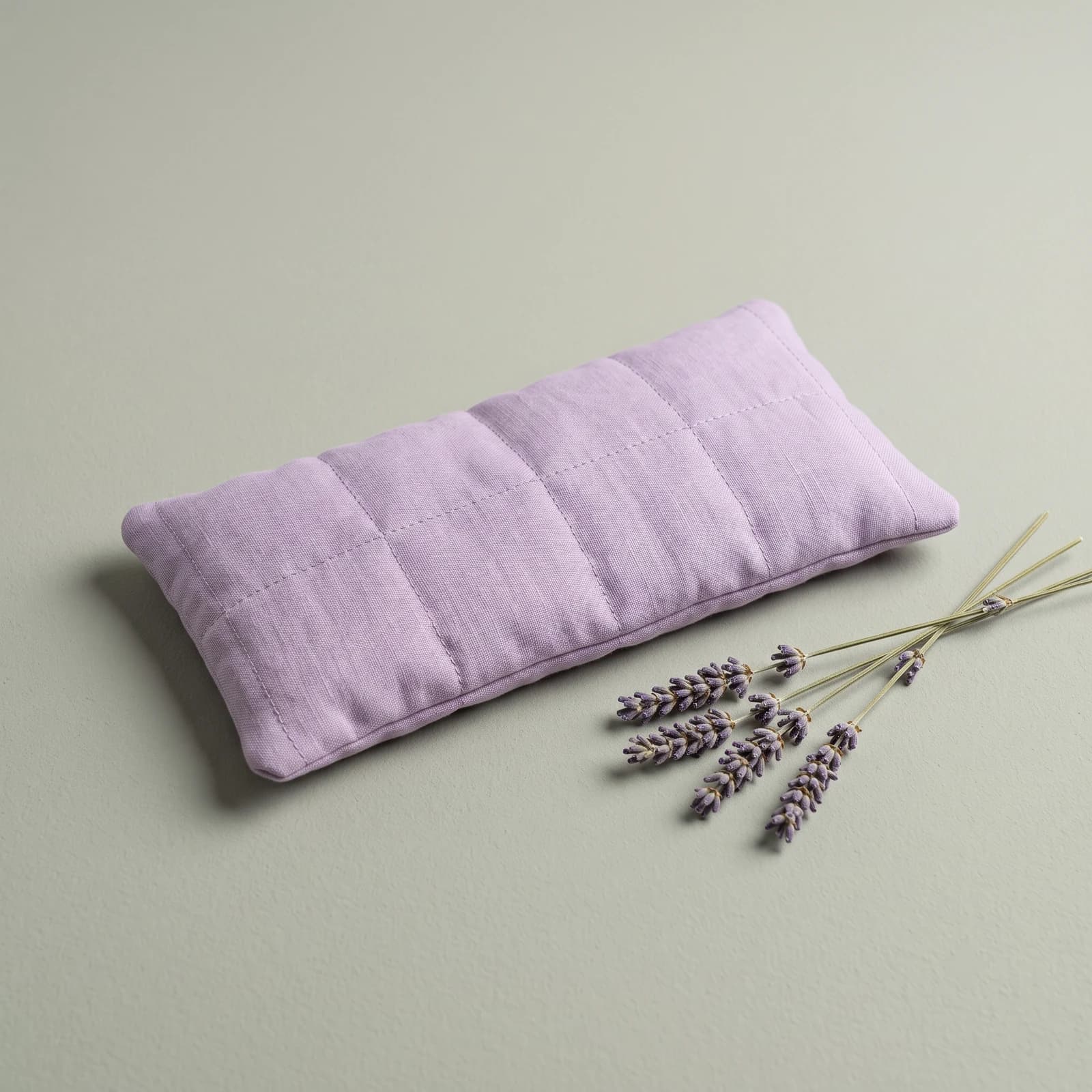
An eye pillow is the least technical thing in a wind-down routine, and often the one people keep reaching for. This one is cotton, filled with wheat grains and dried lavender, and you can warm it or chill it depending on what the evening needs.
1
- Free UK delivery, dispatched within 1–2 business days
- Easy 30-day returns, no hassle
- 30-day satisfaction guarantee on all purchases
VISA
AMEX
Pay
Pay
DIS●VER
DINERS
shop
UnionPay
Soielle is built around the hours before sleep, and this sits at the quiet end of that. It has no cable and nothing to set up. You rest it over closed eyes, the weight settles and the light goes. A dark room helps; something actually resting on your eyes tends to help more.
Warmth or cold, depending on the evening. A few short bursts in the microwave and the wheat holds a soft heat that spreads across the brow and temples, the same idea as a heated wheat bag scaled down to the eye area. Straight from the freezer it does the opposite, and a chilled pillow over puffy morning eyes is a quick way to feel human again. Nothing else in Rest & Recovery does both.
Yoga is where most people meet one of these first, which is why a yoga eye pillow and a bedside one are usually the same object. In savasana at the end of a class the teacher hands them out, the room goes dark under the pillow, and the last five minutes land differently. The gentle weight is the whole point: enough to feel, not enough to press. If you practise at home, keep it with your mat rather than in a drawer.
Most eye pillows sold in the UK are filled with flaxseed or linseed. When we looked at the first page of UK results for eye pillow in July 2026, every ranking specialist was selling a flax or linseed fill, which makes wheat the minority choice rather than the default. Wheat grains are a little larger, so the fill settles differently across the eye sockets, and wheat is the traditional filling for the microwavable heat packs sold as wheat bags. Both materials work. The practical difference is that wheat is the better one to warm and flax is a touch finer to lie under, so if you mainly want cold, either is fine, and if you want heat, wheat is the one to buy.
On price, because it is a fair thing to ask. We priced the UK first page for eye pillow in July 2026 before settling on ours, and the range runs from about £6 for a plain cotton pouch to around £20 for the design-led ones, with the yoga specialists mostly between £8 and £16. At £15.99 this sits in the upper half of that. What the extra buys is the removable washable cover and a fill you can genuinely heat rather than only chill. Used most evenings it works out at a few pence a session across a year, and there is nothing to replace or recharge.
It is also one of the easiest gifts to get right, which is presumably why UK interest in eye pillows climbs so sharply through December. Nobody needs to know a size or a shade, and nobody needs it explained to them.
If you want warmth you never have to reheat, the USB heated eye mask is the powered version: it holds a set temperature for a timed session, where this one starts warm and cools gradually as you lie there. Plenty of people who like one have no interest in the other.
- Cotton outer, wheat grain and dried lavender fill
- Warm in microwave in short bursts, or chill in freezer
- Removable washable cover
- No cable, battery or charging: rests over closed eyes
- Follow heating instructions on the label: never overheat
- Not suitable if you have a wheat allergy
- Let it cool to a comfortable temperature before it touches skin, and never heat it while damp
- Dispatched within 1–2 business days of your order.
- Free shipping on all UK orders: estimated delivery 7–10 business days.
- Easy 30-day returns and a 30-day satisfaction guarantee on all purchases.
- 24-hour cancellation window after placing your order.
- Defective or damaged items are replaced at no cost to you.
Why you'll love the Lavender Wheat Eye Pillow
Two temperatures, one pillow
Short bursts in the microwave for warmth across the brow, or an hour in the freezer for a cold weight over puffy morning eyes. Most eye pillows only really do the cold half well.
It rests, it does not strap on
Nothing pulls at your hairline and nothing presses on your lashes. Turn over and it comes off by itself.
Nothing to charge
No cable, no battery, no timer, no app. It works in a power cut, and it will still work in ten years if you keep the fill dry.
Pennies a session
£15.99 once. Used most evenings that is a few pence a night across a year. Free UK shipping, and a 30-day return window if it turns out not to suit you.
What is an eye pillow?
An eye pillow is a small fabric pouch, usually cotton, filled with a loose natural material and laid over closed eyes to block light and add a little weight. That is the entire design. Wikipedia describes them as "mask-shaped or rectangular pouches" filled with scented or unscented herbs, and lists flax seed, lavender and chamomile among the usual fills. Ours is cotton, filled with wheat grains and dried lavender.
What it does is unremarkable, and that is rather the point. Covering the eyes takes away the last of the light, and a small steady weight gives you something to notice other than your own thoughts. The darkness half is the part with real backing: the Sleep Foundation's guidance is that it is best to sleep in as much darkness as possible, since light in the evening interferes with the body's own sleep signalling. People use one at the end of a yoga class, during meditation, or in the ten minutes before sleep. It is a comfort object rather than a treatment, and you will not find any claims here about it fixing anything.
The difference from a sleep mask is weight and temperature. A mask straps on and stays on all night. An eye pillow rests loose, comes off the moment you turn over, and can be warmed or chilled beforehand, which a fabric mask cannot. If you want something for a full night of sleep, a mask is the right buy. If you want ten deliberate minutes, this is.
How to use the Lavender Wheat Eye Pillow
- 1
Slip the cover off if you are warming it, and check the label for the heating time.
- 2
Microwave in short bursts, following the time on the label, feeling it between bursts. It should be pleasantly warm and never hot.
- 3
For the cold version, seal it in a bag and leave it in the freezer until it is properly chilled.
- 4
Lie down, close your eyes, and rest it across them so the weight sits evenly on both sides.
- 5
Give it ten minutes. NHS guidance on breathing for stress suggests lying down, breathing in gently through the nose for a count of five and out through the mouth for the same count, for at least five minutes.
- 6
Lift it off rather than sliding it, so the fill stays evenly spread.
Care and safety
- Wash the outer cover, never the pillow itself. The wheat and lavender fill has to stay dry.
- Never heat it for longer than the label states, and do not leave it unattended in the microwave.
- Let it cool to a comfortable temperature before it touches skin. If it reads as hot instead of warm, it is not ready yet.
- Keep it away from broken or irritated skin.
- Store it somewhere dry. A wheat fill that smells scorched or musty should be replaced rather than reheated.
- Not suitable if you have a wheat allergy. During pregnancy, or if heat registers differently for you than it used to, use it chilled rather than warmed, or ask a professional first.
Lavender Wheat Eye Pillow: frequently asked questions
- Are eye pillows good for you?
- For comfort and winding down, yes, in the straightforward sense that lying still with your eyes covered is pleasant and most people relax faster doing it. The weight and the darkness are the active ingredients, and neither is complicated. What an eye pillow is not is a medical device: it treats nothing. Persistent eye pain, headaches or changes to your vision belong in front of a GP or optometrist, not in a shopping basket.
- What is an eye pillow filled with?
- Ours is wheat grain with dried lavender. Across the UK market the common fills are flaxseed, linseed and wheat, sometimes with lavender or chamomile added for scent. Wikipedia's entry lists flax seed, lavender and chamomile among the usual materials. The fill decides two things: how the weight distributes, and whether you can heat it. Wheat and flax both take a microwave; anything with a gel or bead insert is a different product with different instructions.
- Can you microwave a lavender eye pillow?
- Yes, this one is made to be warmed in the microwave in short bursts, and the label gives the timing. Take the cover off first, heat it in stages rather than one long burst, and feel it each time. The failure mode with any wheat bag is overheating it in a single go, which scorches the fill and ruins the pillow. Warm should mean pleasant on the back of your hand, not hot.
- Can you use an eye pillow cold?
- Yes, and a lot of people only ever use it cold. Seal it in a bag so the fill stays dry, leave it in the freezer, and it becomes a gentle cold weight for puffy morning eyes or the end of a long screen day. The cold version tends to be the summer habit and the warm one the winter habit, which is part of why it stays in use year round.
- Is an eye pillow the same as a wheat bag?
- Same idea, different shape and different job. A wheat bag is a larger microwavable pack for the neck, shoulders or back. An eye pillow is the eye-sized version, and the weight is tuned so it rests on the eye area without pressing. If you already own a wheat bag you will recognise how this warms, but you would not want a full-size one across your face.
- Eye pillow or sleep mask, which should I get?
- Depends on how long you want it there. A sleep mask straps on and blocks light for a full night, which is what you want for shift work, flights or a bedroom that never gets properly dark. An eye pillow is for a defined ten or twenty minutes, adds weight rather than just darkness, and can be warmed or chilled first. They are not really competing, and plenty of people keep both by the bed.
- How do you make an eye pillow, and is it worth buying one instead?
- Making one is genuinely easy if you sew: a rectangle of cotton, wheat or flax and a spoon of dried lavender, stitched shut. The DIY tutorials that rank for this are not wrong. What you get from a made one is a removable cover you can actually wash, an even fill weight, and a stitched seam that will not split in the microwave, which is the failure people who make their own tend to hit. If you sew and you enjoy it, make one.
- Does the lavender scent fade?
- Yes, gradually. Dried lavender is at its strongest in the first few months and softens from there, and warming it lifts the scent again for a while. That is normal for any dried botanical fill rather than a fault. If you want the scent back permanently you would be buying a new one, so treat the lavender as a pleasant opening note rather than the main reason to buy.
Lavender Wheat Eye Pillow
£15.99
You may also like