Shower upgrade
Use it with shampoo twice a week and it feels like a salon backwash. Also weirdly good on the neck after a laptop day.
Rest & Recovery
Written and reviewed by the Soielle team. We research the sleep-beauty essentials and devices we sell and keep every product detail factual and current. Last updated August 2026.
4.5 · 2 reviews£22.99
£27.99
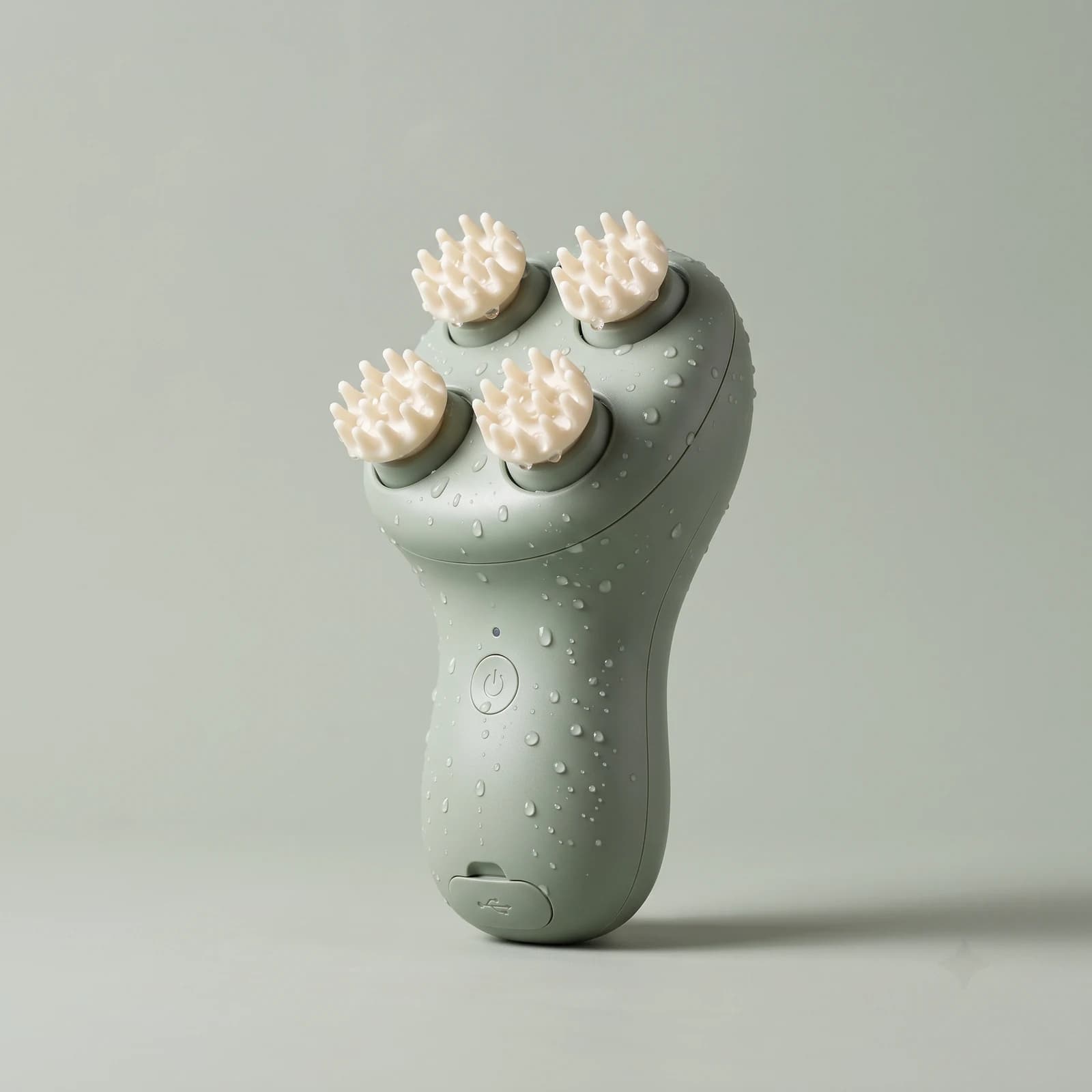
Save 18%Four rotating heads, soft silicone points, and none of the work done by your hands. This electric scalp massager kneads across the head the way fingertips do but for longer than fingertips last, and the waterproof body means it works dry on the sofa or wet in the shower with shampoo already in your hair.
The scalp is somewhere most people never deliberately touch. It sits above the muscles that tighten when you clench your jaw, stare at a screen or carry a day in your shoulders, and by evening it can feel tight in a way you notice only once something starts working on it. That is why a scalp massager sits in Soielle's Rest and Recovery range rather than the hair aisle.
A note on names, because the shops are inconsistent. The same device is listed as an electric scalp massager, an electric head massager or a head massager tool, and all three mean this: a powered unit with rotating heads that does the kneading itself. It is emphatically not a silicone scalp massager, also sold as a scalp massager brush, which is the handheld shampoo tool you push around yourself for a few pounds. Both are useful. They are not substitutes.
The shower is where it earns its keep. Shampoo already has you touching your head, so there is no new habit to build: you swap thirty distracted seconds of scrubbing for a few minutes of actual massage, and the massager works the product down to the scalp rather than around the lengths. IPX7 means it is built for that, not tolerated in it.
Out of the shower it works dry too, which is the version most people end up doing on the sofa with the television on. Speed and direction modes let you go from a slow drift to a firmer knead, and the same handful of minutes works on the back of the neck and across the shoulders, which is usually where the tightness actually started.
Now the part most of this category will not tell you straight. Search any scalp massager and nearly every listing, video and round-up promises hair growth. The honest position is that the research is far thinner than the marketing. The study everyone points at is a 2016 paper in which nine Japanese men performed a standardised scalp massage every day across 24 weeks, finishing with measurably thicker hair: 0.085mm rising to 0.092mm. Nine participants, all healthy men without obvious hair loss, and the authors state plainly that they took no tissue samples and never tested the blood-flow explanation everyone quotes as the mechanism. Promising small pilot, not a reason to buy a gadget. We sell this for tension and for the few minutes it buys you. If thinning is what actually brought you here, the NHS line is to see a doctor first and find the cause, because the options with real evidence behind them come from a clinic.
On price. In July 2026 we went through what the UK first page was charging, and the category splits into two markets that are barely related. Manual silicone brushes run from £1 at The Range and £4 at Boots up to £12 to £16 for the salon and curl brands, with Aveda at the top around £21 to £27. Electric massagers start around £18 and run to about £30, with premium units at £132 and £170. At £22.99 this is mid-table for an electric one. It is not an alternative to a £4 brush, and you should not buy it instead of one if a shampoo tool is what you were after: different jobs, and plenty of people own both.
What you are paying the difference for is the motor and the waterproofing. A manual brush needs your hand doing the work for the whole time, which is why most people stop after about a minute. This does not get bored, it reaches the back of your head without you holding your arms up, and it goes in the shower without being babied.
IPX7 rated, so shampoo, water and steam are all fine. That matters because the shower is a habit you already have, and habits are where devices survive.
Motorised heads knead in circles for as long as you want. Doing that by hand is the bit everyone gives up on after about ninety seconds.
The part you cannot properly get to yourself, and usually the part that is tightest.
We will not claim it regrows hair. It is a head massage on demand, and that is a good enough reason to own one.
Partly because of where it happens. The scalp lies over a thin sheet of muscle and fascia running continuous with the jaw, the temples and the back of the neck, so working one area tends to loosen the others. It is also skin you almost never touch on purpose, which makes it unusually responsive when something finally does.
The other half is attention. A few minutes of steady, repetitive pressure on the head is the sort of input that reliably drops people into a calmer state, which is why the internet is full of people filming themselves using these and calling it the best part of their day. The tingling, slightly shivery response some people get has a name online, and whether or not you experience it, the underlying thing is the same: predictable, gentle, repetitive contact is soothing in a way that is difficult to argue yourself out of.
None of that requires a device. Fingers work, and they are free. What a motor buys you is duration and reach. Most people massaging their own scalp by hand stop long before the point where it becomes properly relaxing, because holding your arms up is tiring and the back of your head is awkward. A motor holds the same pressure for as long as you leave it there, which is longer than most people last unaided.
Where it fits: in the shower with shampoo, or dry in the evening once the day is finished. There is no correct answer, and the useful test is which one you will actually do twice a week without thinking about it.
Charge it over USB before the first session, and check the heads are clipped on firmly.
Detangle first if your hair is long or textured, so the heads sit against the scalp instead of catching on knots.
Rest it on your head so the heads sit against the scalp. Let the weight do the work: pressing down does not improve anything.
Switch on and start slow. Move it gradually so the sides and back get the same attention as the crown.
In the shower, work shampoo in first, then run the massager through so it moves the product down to the scalp.
Around five minutes suits most people and ten is the outside of it. Stop sooner if your scalp starts feeling tender rather than pleasant.
Electric Scalp Massager
£22.99
Use it with shampoo twice a week and it feels like a salon backwash. Also weirdly good on the neck after a laptop day.
The slow mode is a wind-down, the fast mode is a proper knead. Battery lasts me over a week of short sessions.