Better than my curler
Slept on it fine, honestly comfier than expected. Waves lasted two days with a bit of texture spray. My heat-damaged ends are thanking me.
Silk Sleep
Written and reviewed by the Soielle team. We research the sleep-beauty essentials and devices we sell and keep every product detail factual and current. Last updated August 2026.
4.5 · 2 reviews£14.99
£18.99
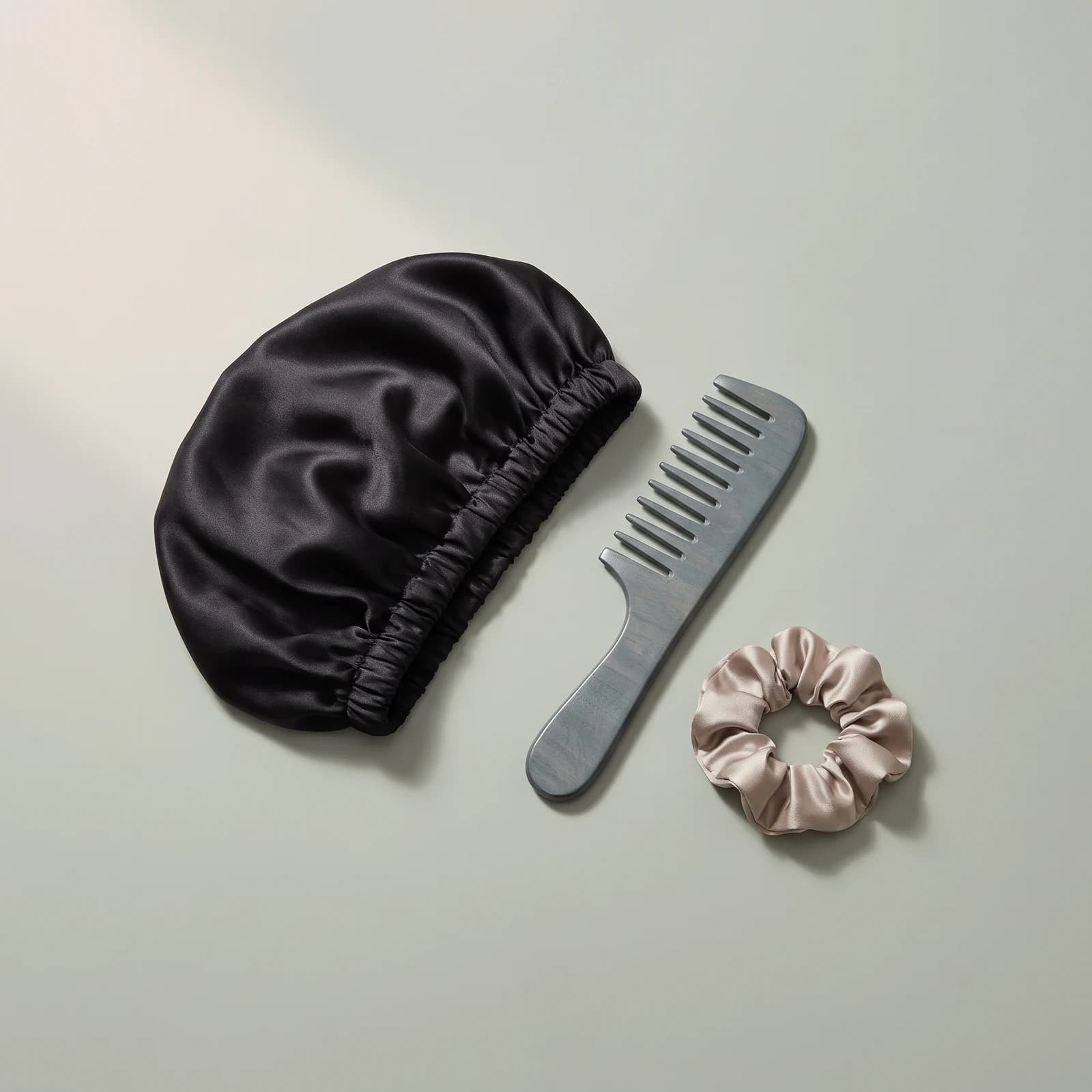
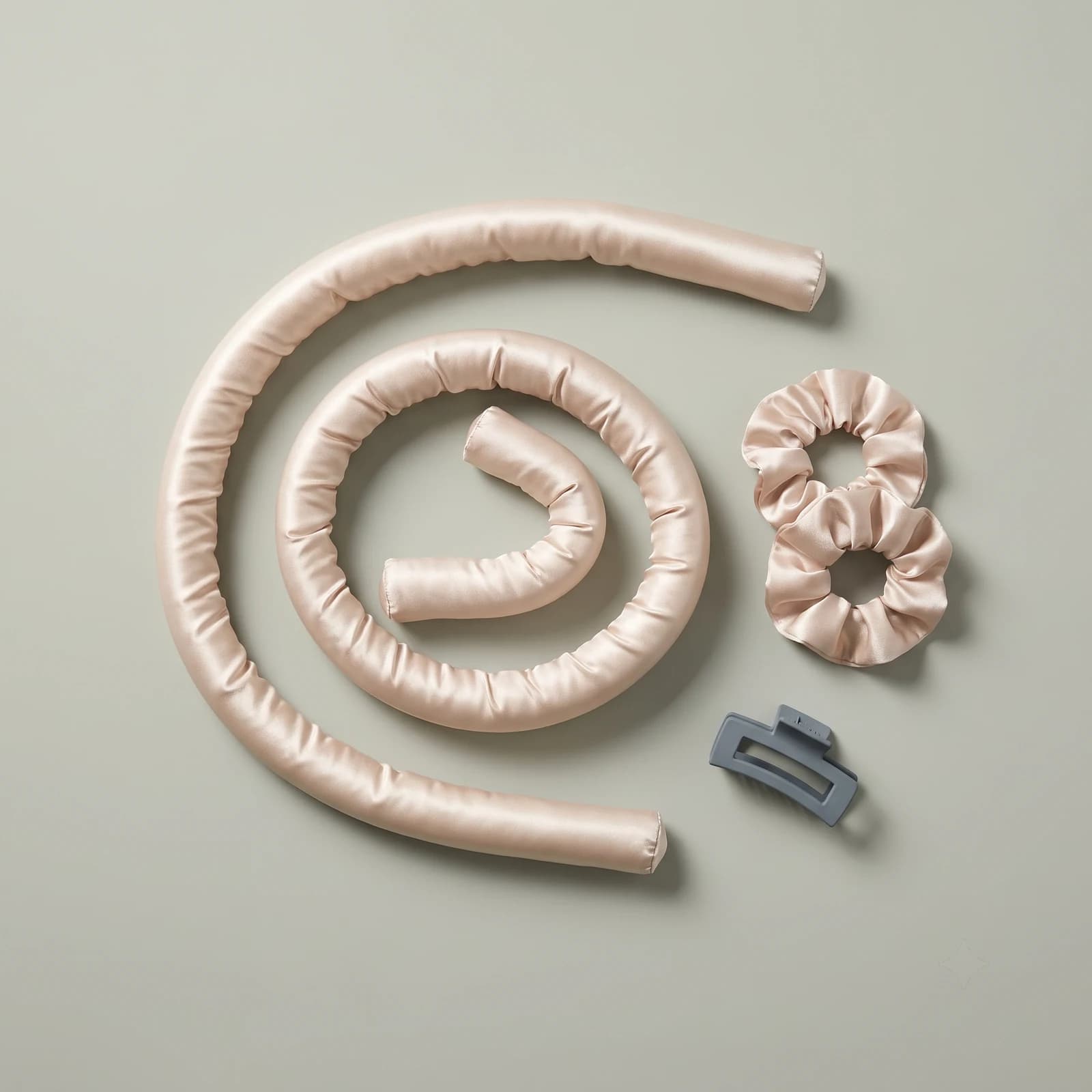
Save 21%A heatless curling rod you wind damp hair around at bedtime and unwind after breakfast. The kit holds the rod itself, two satin scrunchies for the ends and a claw clip for sectioning, and the whole method costs about five minutes of attention at either end of a night you were going to spend asleep anyway.
This is the styling tool that fits how Soielle thinks about evenings. The rest of the Silk Sleep range is concerned with what happens to hair and skin between eleven at night and seven in the morning. A heatless curling rod is the same window pointed at shape rather than condition.
Say the material part first, since this is a shop that mostly sells silk. This kit is satin, and satin names a weave, not a fibre. It is generally spun from polyester. Silk is the fibre, and it costs what it costs for a reason. A satin heatless curling rod is dramatically smoother against hair than cotton or a bare elastic, and it is still not a silk one. The price reflects that and so does this page.
The mechanism is unglamorous. Damp hair dries into whatever shape you hold it in, so winding it around a long padded rod overnight sets a curl as the water leaves. Nothing warms up at any stage. That is the appeal for anyone growing out a few years of straighteners: you are adding no fresh heat exposure. Worth stating precisely, because the category is loose about it: skipping heat from now on does not repair damage that already happened. It only stops the pile getting bigger.
What you trade is time against temperature. A wand delivers curls in a quarter of an hour by running roughly 180 degrees through your hair. Heatless hair curlers take a whole night and run nothing through it at all. Need curls before you leave in twenty minutes? Buy a wand. This is not that.
A lot of people find their way here after improvising with a sock, which is the no-cost version of identical physics: roll a sock, wind damp hair round it, go to bed. It genuinely works, and enough people look it up every month that pretending otherwise would be silly. Three things make a purpose-built rod better. Length, because a sock runs out around your mid-lengths while the rod reaches your tips. Surface, because satin releases hair in the morning instead of gripping it and dragging the curl out. And staying power, because a rod is still on your head at 6am and a sock frequently is not. If a sock is doing the job for you, save your money.
On price, with the real numbers. In July 2026 we read through the UK results for heatless curling rods, and the market sorts into three bands. The floor is foam and fabric at £0.32 to about £4, Home Bargains included at £1.99. The middle is branded fabric and satin: M&S at £8, rated 2.4 out of 5 by its own customers, Invisibobble near £9.45, and the Kitsch satin set at £15 carrying 5,400 ratings at a 4.4 average, which is the fair benchmark for this exact product. The ceiling is genuine silk at £39 to £45, where the Silke London kit lives. We sit at £14.99, a penny under the best-reviewed satin set going and roughly a third of what silk asks. Want silk? Buy silk, and budget three times this.
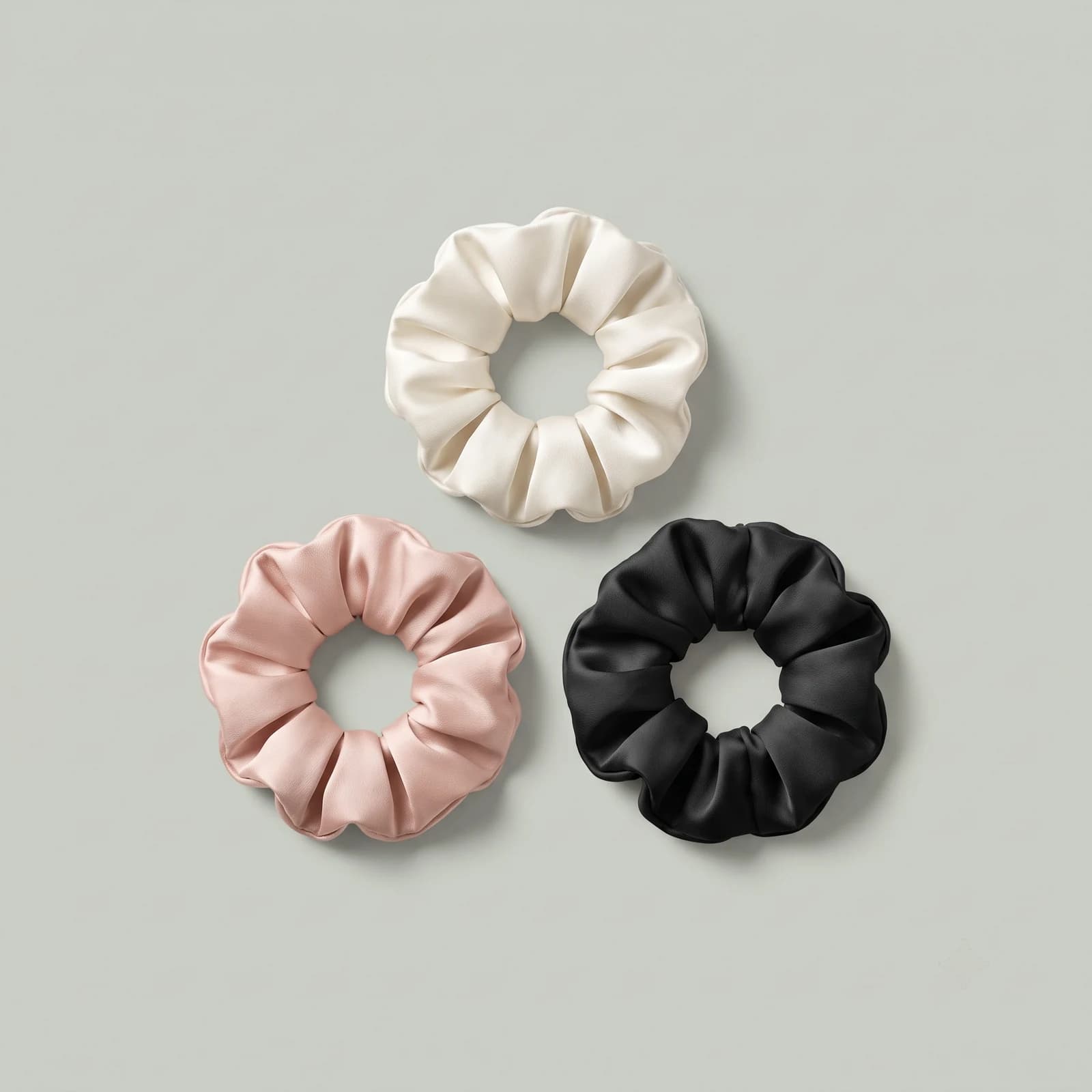
Where it lands in a routine: wash at night instead of in the morning, towel off, wind, sleep. The scrunchies included are satin like the rod, so the ends are held without the dent a bare elastic presses in.
No element, no dial, no scorched section because a wand sat too long. Styling stops being something you have to shield your hair from. It will not undo what a straightener already did, but it stops contributing.
Five minutes winding, eight hours of nothing whatsoever, five minutes unwinding. The middle part is free.
A glossier surface grips hair less as it dries and as you turn over, which is most of the difference between waves and frizzy waves.
£14.99 against the £15 satin set half the internet already owns. Shipping in the UK is free and the return window runs 30 days.
Because your hair spends eight hours pressed against something, and that something decides how it looks in the morning. A heatless curl needs hair to dry in a held shape without being roughed up while it does. Cotton and bare elastics have enough grip to lift the cuticle every time you roll over, and a lifted cuticle is what frizz actually is.
A satin weave is built for the opposite. The Sleep Foundation describes satin as running four or more threads over a single opposing thread, which is what produces that glossy face, and notes that the resulting low friction is what helps prevent frizzing, tangling, matting and breakage. Those are precisely the four things that can go wrong inside an overnight wrap.
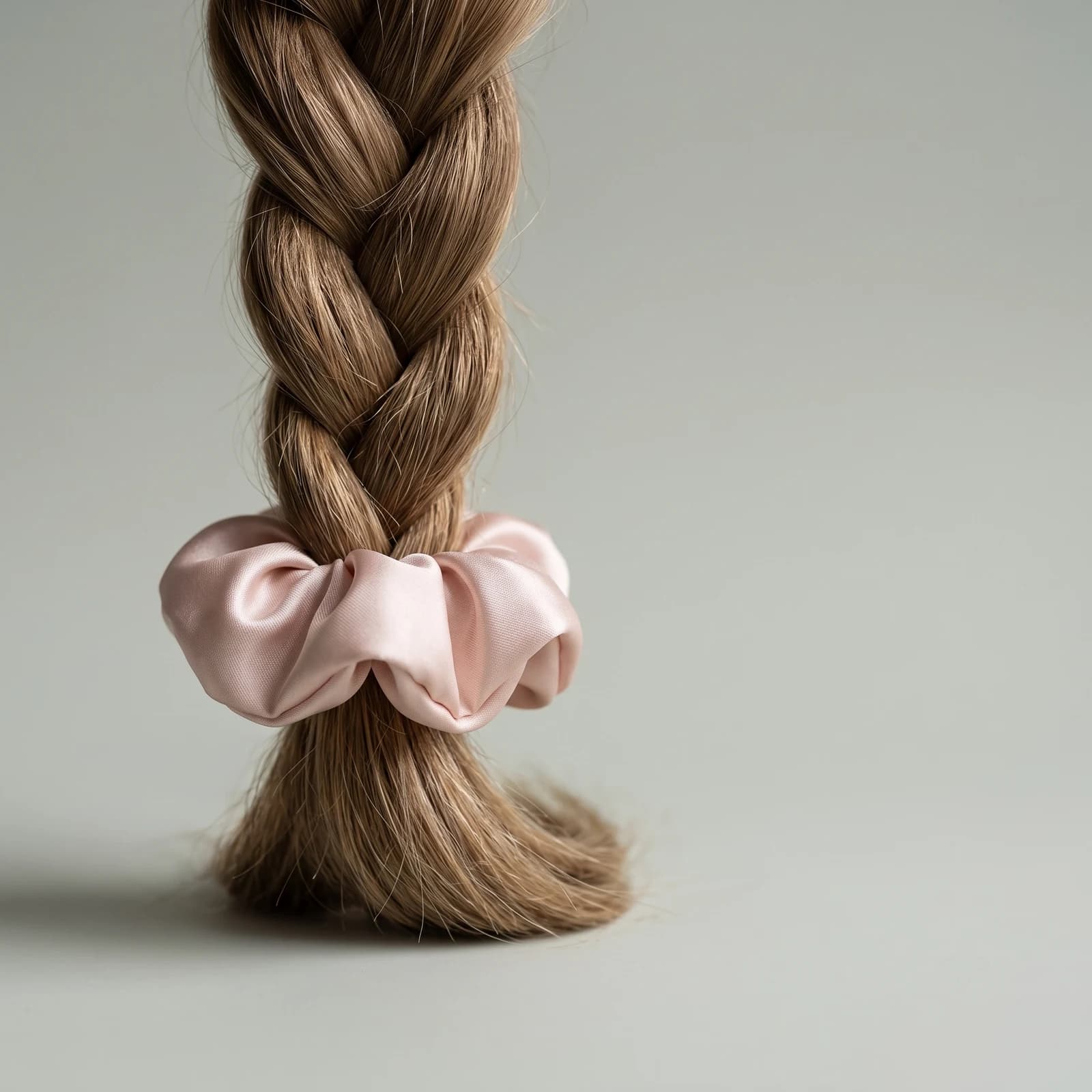
The same logic explains why the ends are secured with satin scrunchies rather than the elastics most kits throw in. Your ends are the oldest and driest hair you own and they sit under the most tension in a wrap. Eight hours of a bare elastic biting into damp tips leaves a crease and stresses the exact section least able to take it.
Be precise about the words, though, because the trade uses them loosely. Silk is a fibre that comes off a silkworm. Satin is a weave, and in 2026 it is usually polyester. The weave buys you most of the smoothness for a small fraction of the money, which is the whole reason this kit is £14.99 and not £42. What it does not buy you is a natural fibre's handling of heat and moisture, so if you sleep warm and you are about to wrap your entire head, that is a genuine thing to weigh first.
None of this changes the mechanism. Curl comes from damp hair drying in a shape. Satin governs how it looks and feels coming out, not whether the method works at all.
Get the moisture right first: towel your hair off, then give it about a quarter of an hour. Damp, not dripping, not bone dry.
Drape the rod across your crown so both ends hang level, roughly where a headband would sit. Split your hair into two even halves.
Starting at the front of one half, lift a small section and roll it around the rod, drawing in a little extra hair with each turn as you travel back towards the nape.
Carry on to the very tips, then hold it all with one of the satin scrunchies. Repeat on the second side.
Leave it overnight. A daytime version works if you can spare two hours or more.
Unroll gently in the morning, break the curls apart with your fingers, and give them a minute to settle before you judge them.
Satin Heatless Curling Kit
£14.99
Slept on it fine, honestly comfier than expected. Waves lasted two days with a bit of texture spray. My heat-damaged ends are thanking me.
First attempt was lumpy because I wrapped unevenly. By the third night I had it down. Damp hair, not wet, is the trick.