Blackout without the pressure
Blocks the streetlight through the curtains completely but doesn't press on my eyes. I forget I'm wearing it, which is the whole point.
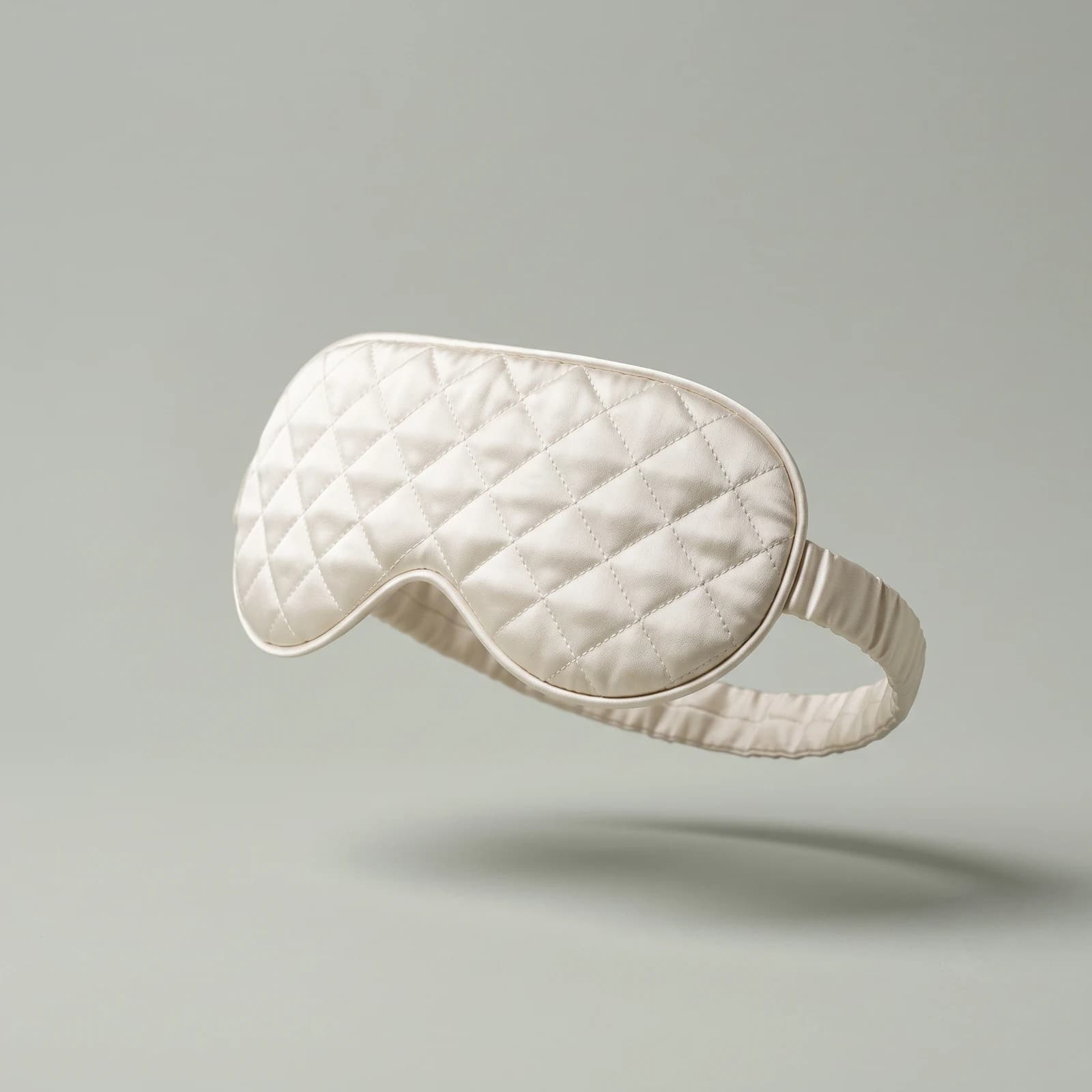
Silk Sleep
Written and reviewed by the Soielle team. We research the sleep-beauty essentials and devices we sell and keep every product detail factual and current. Last updated September 2026.
4.5 · 2 reviews£17.99
£22.99
Save 22%A silk eye mask that actually blacks out. Mulberry silk on both sides over a soft hidden fill, so it blocks light without pressing on your eyes or lashes, and the surface glides over night cream instead of drinking it.
Colour: Ivory
The strap is where most masks fail. A fixed elastic band either grips too hard or works loose after a month, and a velcro fastening catches hair every time you turn over. This one adjusts, sits flat under your hair, and has no velcro anywhere near it. You set the fit once instead of putting up with someone else's idea of it.
The contoured shape keeps pressure off your eyes. A soft breathable fill sits behind the silk so the mask domes slightly rather than flattening against your lids. Lash extensions survive the night, and so does a full eye-cream routine.
Travel is where it does the most work. It packs flat into a side pocket, and it is the only thing that reliably makes a plane seat or an unfamiliar hotel room dark. The complimentary sleep eye mask on a long-haul flight is thin and unshaped, so light comes straight in at the nose and brow. Hotel curtains that leave a two-inch gap are the same problem, and no amount of tucking fixes them at 5am in June.
On price, £17.99 sits level with the department-store silk masks and well under the specialist ones. M&S and John Lewis run £16 to £18, Next £20, and the London silk labels £35 to £55 for the same function (UK retail prices as listed on Google Shopping, checked 29 July 2026). Worn every night for a year, £17.99 works out at 4.9p a night. The money above this tier buys packaging, a wider colour range and a name, not darker blackout.
double-sided silk over a soft fill blocks light from the sides as well as straight on, so a streetlight or a 4am sunrise stops deciding when you wake up.
the contoured shape domes over your lids rather than flattening against them. That is what makes it wearable if you have lash extensions or you sleep on your side.
it adjusts, lies flat under your hair and uses no velcro. Nothing digs into the back of your head and nothing catches when you turn over.
£17.99, against the £35 to £55 the London silk labels charge. UK delivery is free and returns stay open for a month.
For blocking light, yes, and the reasoning holds up better than most people assume. The Sleep Foundation's guidance is to sleep in as much darkness as you can manage. It also makes a point most of us get wrong: shutting your eyes does not do the job. Research it cites finds that "your eyelids can't block sufficient light". Light hitting the eye is one of the main signals the body uses to set its internal clock. Darkness is what starts melatonin production. A mask closes that gap physically.
Whether a given mask actually closes it comes down to how it is built. A padded, double-sided mask with a shaped edge seals at the nose and along the brow bone. That is where light gets in on a flat mask. Silk on its own does nothing for blackout: a thin silk mask will let in more light than a thick padded cotton one. Padding and shape do that work, and the strap holds it in position. The Sleep Foundation also notes that even low levels of ambient light during sleep have been linked to eye strain, which is the less dramatic reason people notice a difference.
What silk changes is what the mask does to your face over seven hours. A smooth filament surface slides over the eye area instead of dragging at it. It holds less moisture than cotton, so an overnight eye cream stays on your skin rather than in the fabric, and it does not press a crease into your cheek by 3am. Those are friction and absorbency properties of the fibre, and they are the reason a smooth weave feels different from brushed cotton.
What it will not do is fix your sleep on its own. We would rather say that than sell it as a cure. If you are waking at 4am because of caffeine or a racing mind, a mask deals with none of that. It is a narrow mechanical fix: less light reaching your eyes, and less pressure on the skin around them.
Set the strap length once, with the mask on, so it sits snug enough to block light without gripping.
Position the contoured side over your eyes with the shaped edge along your brow bone, then settle it down towards the nose.
Do your eye cream first and give it a minute to sink in. Silk holds less than cotton, but nothing sits well on a wet layer.
Sleep on it. If light still leaks at the nose, ease the mask a few millimetres lower rather than tightening the strap.
For flights and hotels, put it on before you think you need it, so the cabin lights coming up do not wake you first.
Silk Sleep Mask
£17.99
Blocks the streetlight through the curtains completely but doesn't press on my eyes. I forget I'm wearing it, which is the whole point.
I sleep days after nights on call. This plus earplugs is the routine now. Strap stays put and there's no velcro grabbing my hair.